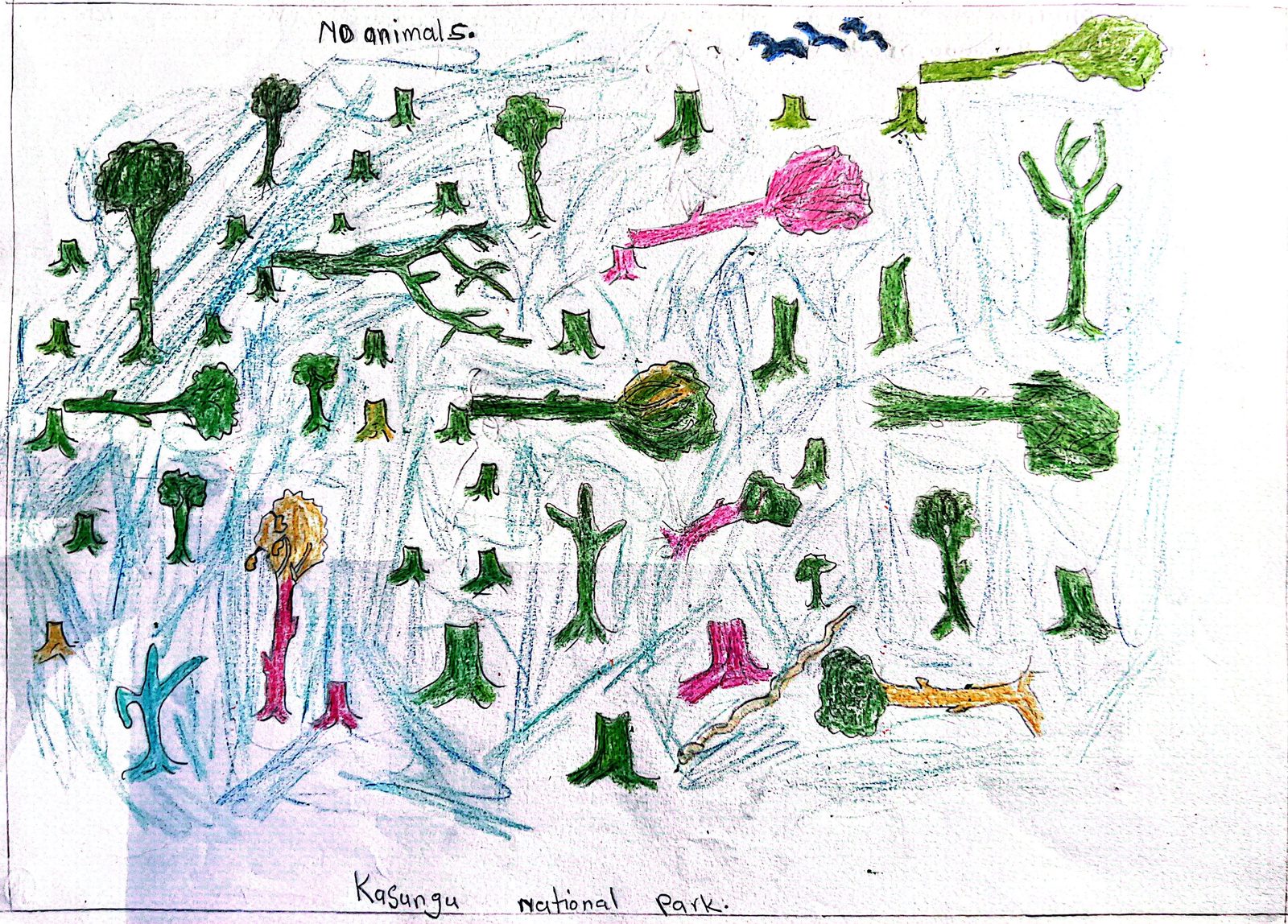
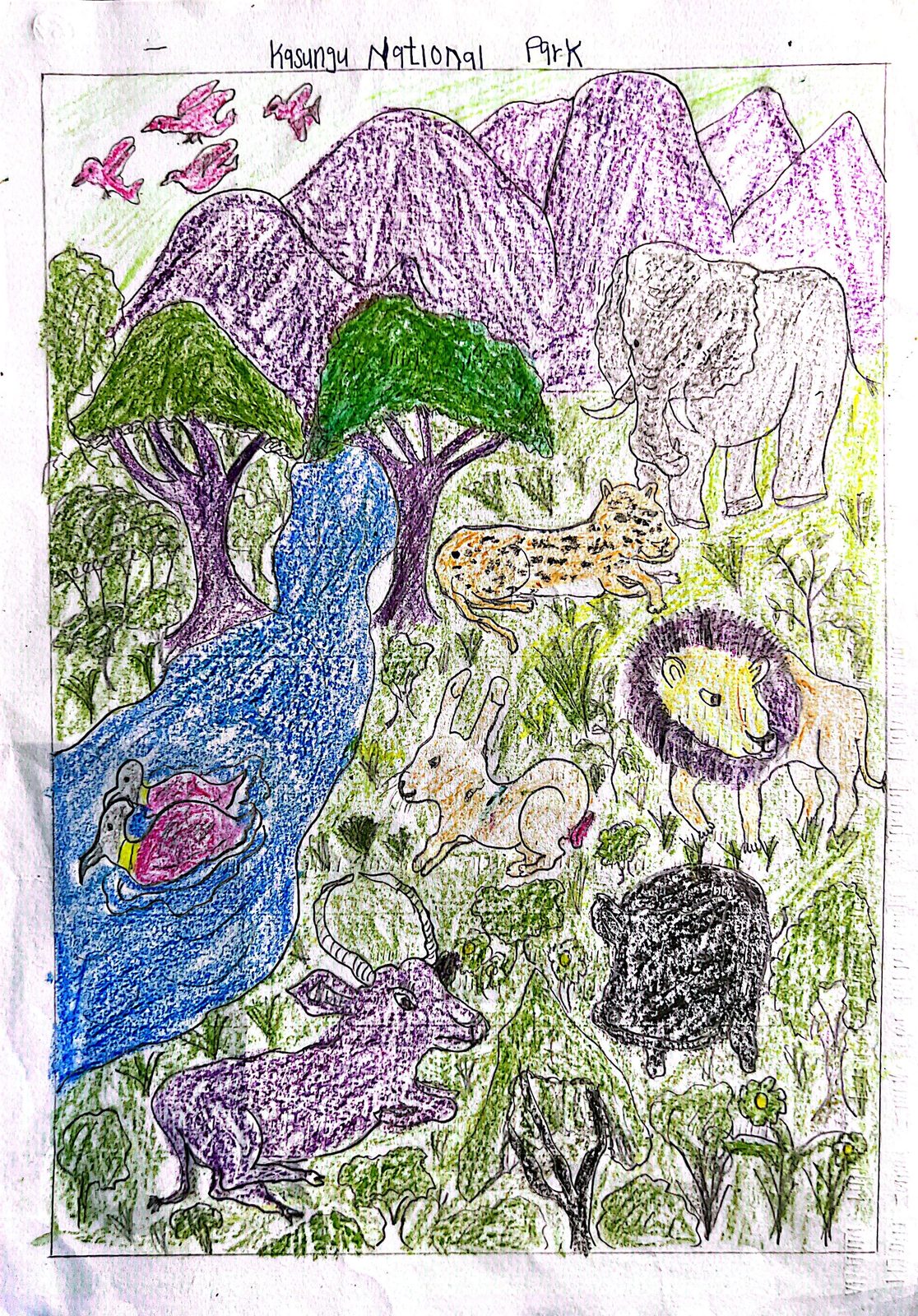
Misozi Primary School sits close to Kasungu National Park, in central Malawi. The children here live alongside one of the country's largest protected areas — and alongside the pressures on it. The class ran the activity in a single ordinary lesson: a few short questions first, then an hour of drawing, with no wildlife lesson beforehand that might have shaped what they pictured.
“They care about the animals. That is not the problem. The problem is that many of them have already decided the animals will not be here.”A teacher at one of the founding schools, Kasungu
What the drawings showed
Across both founding schools, almost every child said that protecting wild animals mattered to them. But when they drew the future, the pages filled with cut stumps, fire, bare hillsides and empty land. Seventeen children out of the hundred and fifty drew a future with no animals in it at all, several writing the words across the paper. A smaller group drew the opposite: parks full of elephants, lions and birds, with people living alongside them.
That gap — between what children say they value and what they actually expect to happen — is the finding that started this project, and the question we are now asking in classrooms elsewhere.
Drawings are shown with the school's permission and carry no names. Photographs that show children's faces are published only where a guardian has given permission for that specific image.